
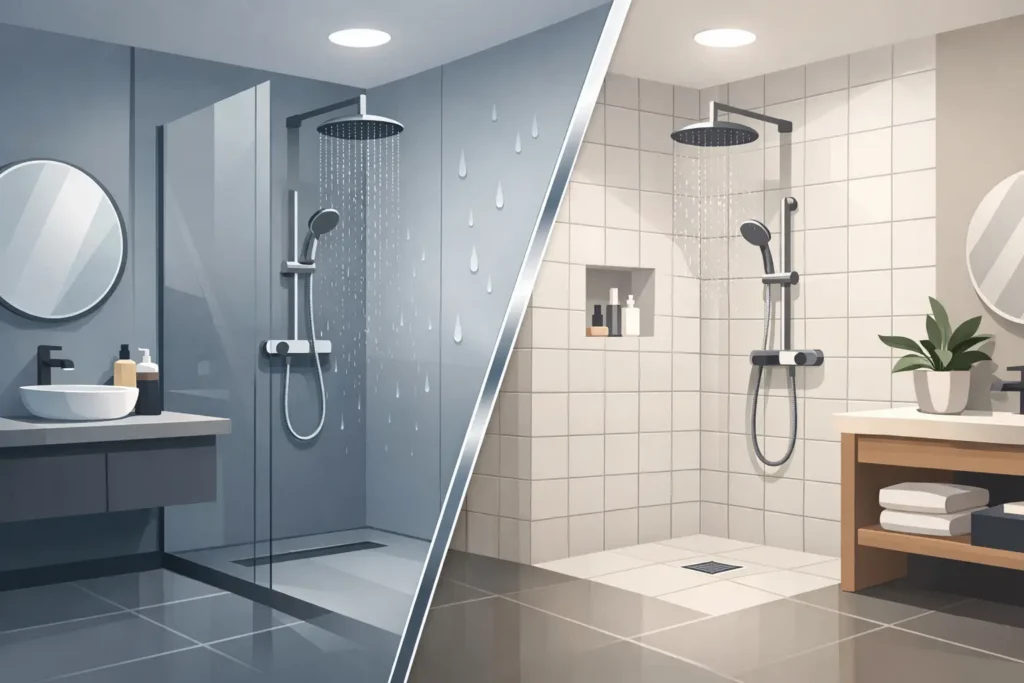
A wet room should feel calm, clean and considered – not like a room full of grout lines waiting for attention. When weighing up wet room panels vs tiled walls, the right choice depends on more than appearance. It comes down to the condition of the existing room, how heavily it is used, the finish you want to achieve and how much disruption you are prepared to accept.
Both options can create a luxurious, waterproof bathroom when specified and installed correctly. Tiled walls offer detail, texture and traditional character, while wall panels provide a streamlined, low-maintenance surface with far fewer joins. For homeowners, landlords and commercial property owners, understanding the practical differences can make a major difference to the finished result.
Wet Room Panels vs Tiled Walls: The Main Difference
The most obvious difference is the number of joints. A tiled wall is made up of many individual tiles, with grout lines between them. A wet room panel is generally a large-format waterproof board or sheet, fitted with sealed edges and joints. This gives panels a more continuous appearance, particularly in shower areas and on full-height feature walls.
That difference affects almost everything else: cleaning, visual impact, installation time and long-term upkeep. Neither is automatically the better choice. A beautifully tiled wet room can look exceptional, but it relies heavily on precise preparation, sound waterproofing behind the tiles and well-maintained grout. Panels reduce the amount of grouting dramatically, but the quality of the panel system, edge trims and sealing work remains just as important.
Appearance and Design Flexibility
Tiles remain popular for good reason. They are available in an enormous range of shapes, sizes, colours and finishes. Small mosaics can bring character to a shower niche, while porcelain stone-effect tiles can create a refined, architectural look. Tiles also make it easier to introduce patterns, borders or contrasting layouts.
Panels have moved well beyond the plain, glossy finishes many people associate with older bathroom cladding. Premium options can replicate marble, natural stone, concrete, terrazzo, slate and polished mineral surfaces. Their scale creates a clean, contemporary look, with fewer visual interruptions across the wall.
For a compact bathroom or ensuite, panels can make the room feel more open because there is less grid-like patterning. In a larger, design-led bathroom, tiles may offer more freedom to create a bespoke layout. The best choice often comes down to whether you prefer a calm, uninterrupted surface or a finish with more texture and detail.
Creating a coordinated finish
A considered wet room does not need every wall to be treated in the same way. Panels can work particularly well inside the showering zone, where easy cleaning and minimal joins are valuable. Tiles may then be used elsewhere to add texture or define a feature wall.
Existing tiled walls can also be transformed rather than automatically removed, provided the substrate is sound and suitable for the chosen finish. Professional surface restoration and spray finishing can refresh tired tiles in a carefully selected colour, helping create a more cohesive, modern space without the mess of full replacement.
Waterproofing and Everyday Performance
A wet room is only as reliable as the waterproofing system beneath and around its visible surfaces. Tiles are not waterproof by themselves. The grout and adhesive system, movement joints, substrate and tanking behind the tiled area all play a part in preventing moisture from reaching the structure of the building.
Wet room panels are designed as waterproof decorative surfaces, which can simplify the wall finish. Their larger format means fewer potential weak points than a wall covered in small tiles. However, panels are not a shortcut around proper preparation. Corners, cut-outs for shower controls, pipe penetrations and panel joins must all be sealed accurately to protect the room over time.
For busy family bathrooms, rental properties, hotels and holiday accommodation, fewer grout lines can be a real advantage. It reduces the areas most likely to show discolouration, soap residue or early signs of wear. In any property, though, a professional assessment of the wall condition and wet room system should come before choosing the decorative finish.
Cleaning and Maintenance
This is where panels often have the practical edge. Their smooth, largely joint-free surface is quick to wipe down and gives limescale and soap scum fewer places to collect. Routine cleaning is straightforward, which can be especially useful in hard-water areas or bathrooms that see frequent use.
Tiled walls need more attention because grout is naturally more porous and textured than a finished panel surface. Even when properly sealed, grout can gradually become marked or dull, particularly in shower areas. It may require periodic deep cleaning and, eventually, local repair or regrouting to keep the room looking its best.
That does not mean tiles are difficult to live with. Larger-format tiles with narrow grout joints are far easier to maintain than small mosaics with extensive grouting. If you love the character of tile, choosing a sensible format and colour can reduce the maintenance burden without compromising the design.
Installation, Disruption and Existing Walls
Removing old tiles can be one of the messiest stages of a bathroom refurbishment. It can expose damaged plaster, create significant dust and add time before the new wall finish can be installed. If existing tiles are securely bonded, level and free from underlying moisture issues, there may be options to transform the space without stripping everything back.
Panels can often be fitted over suitable existing surfaces, although this must be assessed carefully. The wall needs to be stable, flat enough for the system and free from movement or damp-related problems. In the wrong conditions, covering over an issue simply delays it.
Tiles generally require more time to install because every tile needs setting out, fixing, grouting and finishing. Complex layouts, patterned tiles and small-format designs naturally take longer. That additional labour may be worthwhile where the visual detail is central to the scheme, but it is worth factoring in when minimising downtime is a priority.
For commercial washrooms, rental turnarounds and occupied homes, the reduced disruption of a panel-based solution can be particularly appealing. A professionally planned transformation can retain sound surfaces where appropriate, while still delivering a high-end result.
Durability, Repairs and Long-Term Value
Porcelain and ceramic tiles can last for many years when installed correctly on a stable substrate. Individual damaged tiles can sometimes be replaced, although finding an exact match years later is not always easy. Cracked grout or loose tiles should never be ignored, as they may indicate movement or moisture affecting the wall behind.
Quality wet room panels are designed for demanding bathroom conditions, but they are not indestructible. Deep impacts, damage around fittings or failed seals need prompt professional attention. Because panels are supplied in large sections, a local repair is not always as simple as swapping one tile. The upside is that there are fewer grout joints to maintain across the wall in the first place.
Long-term value is not simply about the initial material choice. It includes preparation, installation quality, cleaning time, future maintenance and whether the finish continues to suit the property. A well-executed restoration of existing surfaces can offer excellent value where replacement is unnecessary, while a full tiled installation may be justified for a bespoke design or when the substrate needs rebuilding.
Which Option Is Right for Your Wet Room?
Choose panels when you want a sleek, modern finish with minimal grout, easy day-to-day cleaning and potentially less disruption. They suit shower enclosures, contemporary wet rooms and properties where a hygienic, consistent surface is a priority.
Choose tiles when you want maximum decorative freedom, intricate layouts or a traditional material-led appearance. They are a strong choice for homeowners and designers who want a more individual finish and are comfortable with the extra care grout may require.
The condition of the room should guide the decision before style does. Sound existing tiles may be suitable for professional refinishing or for an approved overlay system, while loose tiles, water damage or an uneven substrate may call for more extensive preparation. Honest advice at this stage protects both the appearance and performance of the finished wet room.
A luxury bathroom is not defined by whether it has panels or tiles. It is defined by careful preparation, a finish that suits the way the space is used and workmanship that gives every edge, joint and surface the attention it deserves.