
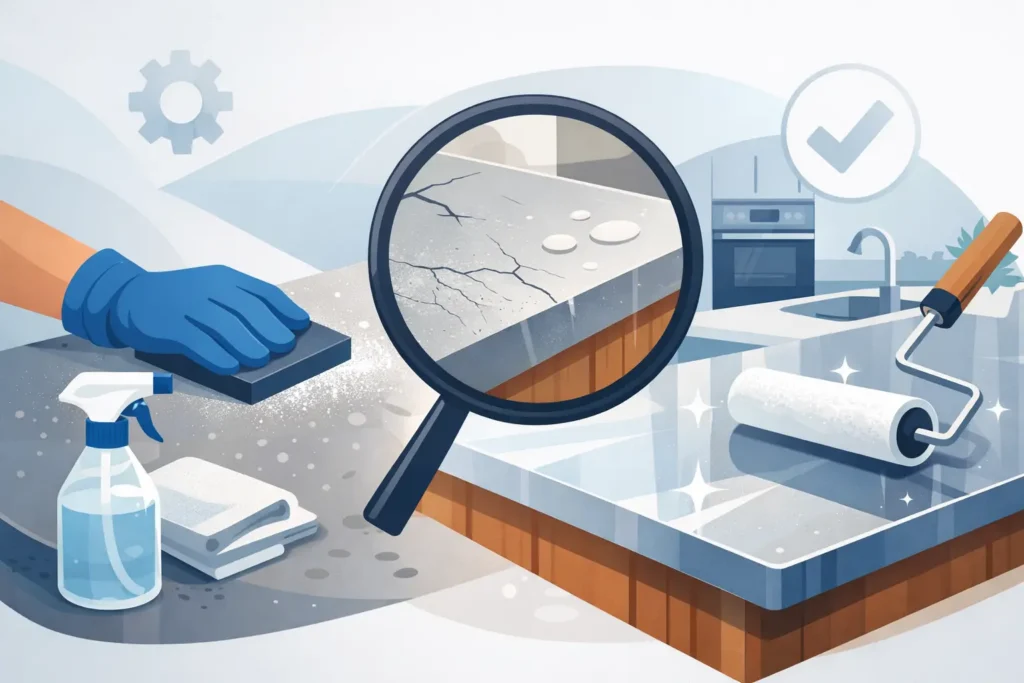
A worktop can look tired long before it has reached the end of its useful life. Water marks around the sink, heat staining, scratches, worn laminate edges and dated colours can make an otherwise sound kitchen feel ready for replacement. Yet the quality of a restored surface is decided long before the final colour is sprayed. Worktop coating preparation is the stage that determines whether a new finish simply looks good at first or performs reliably through daily family life, cooking and cleaning.
For a premium sprayed granite or stone-effect finish, preparation is not a quick clean and a coat of paint. It is a considered process of assessing the substrate, repairing damage, creating the correct surface profile and protecting the surrounding kitchen. This attention to detail is what allows an existing worktop to be transformed into a durable, contemporary feature without the disruption of removing and replacing it.
Why worktop coating preparation comes first
Every worktop tells us something about the demands placed on it. A surface beside a busy hob may show heat-related wear. The area around a sink may have old silicone, water damage or swelling at joints. A breakfast bar might be heavily scratched, while a rental property worktop may have years of staining hidden beneath cleaning products and temporary repairs.
Coatings need a stable, clean and properly prepared base to bond correctly. If grease, silicone residue, moisture, loose material or surface contamination remains, it can compromise adhesion. The result may not become obvious immediately, but it can affect the appearance and service life of the finish over time.
Professional preparation also creates consistency. A worktop is rarely one perfectly uniform surface. There may be cut-outs, joins, upstands, curves, drainer grooves, exposed edges and awkward areas around appliances. Treating each of these carefully helps ensure the finished coating looks considered rather than patched together.
Assessment before any surface is coated
The first part of any restoration is deciding whether the existing worktop is suitable for refinishing. Many laminate, wood-effect, stone-effect and composite surfaces can be transformed, provided the underlying structure is sound. A professional assessment identifies issues that need addressing before coating begins, including lifting edges, damaged corners, open joints or areas affected by prolonged water exposure.
Not every defect is purely cosmetic. A small chip may be straightforward to repair, but substantial swelling around a sink cut-out can indicate that moisture has affected the core material. In these cases, honest advice matters. Preparation can repair and reinforce many imperfections, but it cannot make an unstable substrate permanently sound.
This assessment stage is also the right time to consider the finished look. A lighter granite-effect worktop can lift a dark kitchen, while deeper charcoal, black or natural stone tones can add contrast to pale cabinetry. The chosen colour and texture should suit the room, but it must also be applied over a surface prepared to an equally high standard.
Cleaning beyond everyday cleaning
A worktop may appear clean after normal household care, yet still carry residues that affect a coating. Cooking oils, polish, limescale products, silicone, adhesive traces and ingrained dirt can all remain on the surface. These contaminants need to be dealt with methodically rather than covered over.
This is particularly relevant around hobs, sinks and splashback lines, where years of use can leave a build-up that is not always visible. Professional cleaning and degreasing form part of the preparation process because the coating needs direct contact with the properly prepared surface beneath.
Repairs that disappear into the finish
Chips, dents, small cracks and worn edges can distract from even the best new colour. Before spraying, these areas are repaired, shaped and refined so that they blend naturally into the worktop profile. The aim is not merely to fill a defect, but to restore a surface that feels even and looks cohesive once the decorative finish is applied.
Edges deserve particular care. They are exposed to knocks, moisture and regular contact, especially on breakfast bars and beside appliances. A well-prepared edge helps the finished worktop look factory-quality from every viewing angle, rather than appearing strong across the main surface but weak at its most vulnerable points.
Creating the right foundation for adhesion
Once repairs and cleaning are complete, the worktop is prepared to give the coating the correct key. This controlled surface preparation is a central part of professional spray finishing. It allows the specialist coating system to bond securely while maintaining an even appearance across flat areas, edges and detailed sections.
The right method depends on the material and condition of the worktop. A smooth laminate surface requires a different approach from a previously painted worktop or a textured composite finish. Applying a one-size-fits-all process can lead to inconsistent results, which is why experience with different substrates is valuable.
At Spray Granite Specialists, more than 22 years of spray finishing experience informs each stage of the work. The goal is to create a surface that is ready for the selected coating system, not simply one that has been made to look rougher. There is a significant difference between surface abrasion carried out with care and preparation that leaves visible marks, uneven areas or damage beneath the final finish.
Protecting the kitchen while the work is carried out
Worktop restoration should improve a kitchen without turning the rest of the room into a building site. Careful masking and protection are therefore part of the preparation, not an afterthought. Cabinets, walls, flooring, appliances and adjoining surfaces are protected before spray work begins.
This allows the coating to be applied accurately while helping to keep disruption controlled. It is especially important in occupied homes, rental properties, hospitality settings and commercial spaces where presentation and downtime both matter.
A professional team will also plan around the practical details: access to the room, worktop cut-outs, sink and hob areas, ventilation requirements and the condition of surrounding silicone or seals. These details may seem minor, but they contribute to a clean, refined result.
The coating system is only as good as its base
Premium worktop resurfacing is built in layers, with each stage supporting the next. The prepared surface receives the appropriate primers and specialist coatings before the decorative spray granite or stone-effect finish is developed. Protective topcoats then help create a practical surface designed for everyday use.
The visual transformation is often the part clients notice first. A dated brown laminate can become a contemporary light stone finish; a worn black surface can be refreshed with a more refined granite texture. However, the lasting value lies in what cannot be seen once the project is complete: sound repairs, thorough cleaning, controlled preparation and correct coating application.
This is also why preparation should never be rushed to meet an unrealistic timescale. Drying and curing requirements, the extent of repairs and the worktop’s existing condition all affect the process. A quality finish needs the right conditions at every stage.
What a well-prepared restored worktop delivers
When the worktop and coating system are suited to one another, restoration can provide a practical alternative to replacement. It avoids the need to remove existing units simply because the work surface looks dated, and it can dramatically change the character of the room.
A professionally finished worktop is easier to maintain than a visibly worn or damaged surface, and its refreshed appearance can bring cabinets, splashbacks and appliances together into a more considered scheme. For landlords and commercial property owners, it can be an efficient way to update presentation between tenancies or refurbishments. For homeowners, it offers the opportunity to achieve a luxury new look while retaining a kitchen layout that already works well.
There are sensible limitations. A coating cannot resolve major structural failure, and no worktop should be treated as indestructible. Using suitable cleaning products, avoiding harsh abrasion and following aftercare guidance will help protect the appearance of the surface. The benefit of expert preparation is that it gives the finish the best possible foundation from day one.
Choose craftsmanship before colour
Colour samples and stone effects are exciting decisions, but they should come after the condition of the worktop has been properly understood. The most successful transformations begin with a clear assessment and a preparation process tailored to the surface in front of us.
If your existing worktop is fundamentally sound but no longer suits your kitchen, a professional consultation can clarify what is possible, what needs repairing and which finish will best complement your space. The final colour may catch the eye, but careful preparation is what makes that transformation worth living with.