
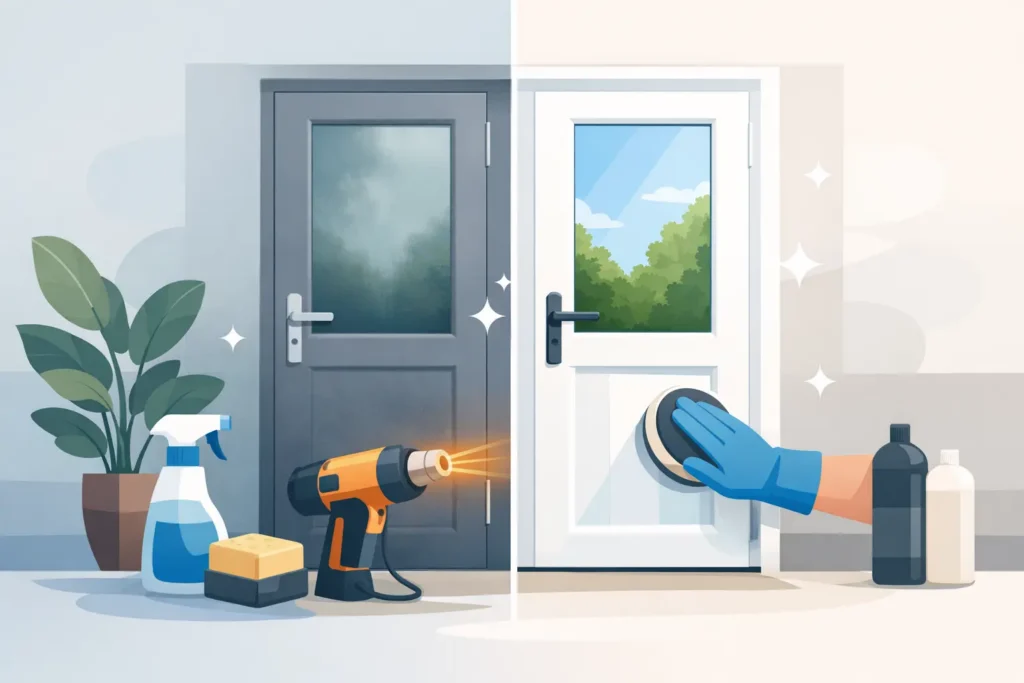
A front door can make an otherwise well-kept property look tired long before anything inside needs attention. When the original finish has become chalky, patchy or noticeably lighter on the sun-facing side, many homeowners assume replacement is the only answer. In many cases, however, it is possible to restore faded uPVC doors with a professional spray finish that refreshes the colour, protects the surface and gives the entrance a far more considered appearance.
This is not simply a matter of applying paint over old plastic. A lasting result depends on the condition of the door, the preparation beneath the coating and the quality of the spray system used. Done properly, refinishing can transform a dated white, faded coloured or weather-worn uPVC door without the cost, waste and disruption of fitting a new one.
Why uPVC doors fade and lose their finish
uPVC is chosen for good reason. It is low maintenance, practical and widely used on homes, flats, rental properties and commercial premises. Yet it is not immune to years of exposure. Strong daylight, changing temperatures, airborne dirt and repeated cleaning gradually affect the outer surface, particularly on doors that face south or west.
Fading is often most obvious on coloured uPVC. What began as anthracite grey, black, green, blue or a rich wood-effect tone can lose depth over time. White doors may develop a dull, slightly yellowed or uneven appearance instead. In both cases, the change can draw attention to marks around the letterbox, handle and frame, making the whole entrance look older than it is.
The issue is not always just colour. A door may feel rougher or more porous than it once did, with ingrained staining that ordinary cleaning no longer shifts. If the door itself remains sound, professionally refinishing it is often a sensible alternative to replacement.
When professional restoration is the right choice
The best candidates for restoration are structurally sound uPVC doors with a tired exterior finish. Minor superficial scratches, fading, colour inconsistency and stubborn cosmetic marks can usually be addressed as part of the preparation and spraying process.
A specialist should assess the door before recommending any work. Deep physical damage, movement around hinges, failed locking mechanisms, distorted panels or significant cracks may need repair or a different solution first. Honest advice matters here: a premium finish can dramatically improve a door’s appearance, but it cannot correct underlying structural faults.
It also depends on the desired outcome. Some customers want to return a faded door to a crisp version of its original colour. Others take the opportunity to change the look entirely, moving from plain white to a contemporary charcoal grey, a softer heritage shade or a colour selected to complement windows, brickwork and interior design. Colour matching can be particularly useful where only one door or frame needs attention and the surrounding joinery must still look cohesive.
How specialists restore faded uPVC doors
Professional uPVC door restoration is a controlled finishing process, not a quick cosmetic cover-up. The visible spray stage is important, but the preparation beforehand determines how well the new finish bonds and performs.
Careful assessment and preparation
Before any coating is applied, the surface must be thoroughly cleaned and prepared to remove contaminants that could compromise adhesion. This includes traffic film, grease, old polish, silicone residue and the ingrained dirt that gathers in profiles and around fittings.
The door is then carefully keyed where appropriate, with attention paid to scratches, small imperfections and areas where the existing surface has degraded. Surrounding brickwork, glazing, seals, handles and hardware are protected with precise masking. Good masking is not a minor detail – it is what allows a newly finished door to look crisp around every edge rather than obviously painted in place.
A professional will also consider the material and construction of the door. uPVC panels, frames, trims and composite elements can respond differently, so the preparation and coating system need to suit the individual surface.
Premium coatings applied by spray
Once prepared, the door is coated using a specialist spray application designed for exterior uPVC and similar substrates. Spraying creates an even, refined finish that is difficult to achieve with brush or roller application, especially across moulded panels, grooves and detailed frame sections.
The aim is a consistent, factory-quality appearance with no heavy texture, visible brush marks or uneven coverage. Professional-grade coatings are selected for adhesion and exterior durability, helping the refreshed colour stand up to everyday weathering and use.
The right finish should look at home on the property. A subtle satin sheen can suit many modern homes, while other finish levels may be chosen according to the existing windows, architectural style and colour scheme. The colour itself has a major effect too. Darker shades can create a striking entrance, but they may show dust or scratches more readily than mid-tones. Lighter neutrals can feel timeless and work well with a wide range of façades.
A transformation with less disruption
Replacing a door can involve measurements, manufacturing lead times, fitting work and the disposal of a unit that may still be perfectly serviceable. Refinishing focuses on the surface that has deteriorated while retaining the existing door, frame and hardware where they remain in good condition.
That makes it an appealing option for homeowners improving kerb appeal before selling, landlords refreshing a rental property between tenancies, and commercial property owners who want a smarter entrance with minimal disruption. It also gives more freedom than standard replacement ranges, as a bespoke colour can be chosen to suit the building rather than being limited to available door finishes.
Colour choices that add value to the entrance
A restored door should not look like an isolated update. The most successful colour choices take account of the whole exterior: window frames, roofline, brick colour, render, garage doors and the amount of natural light at the front of the property.
Anthracite grey remains a popular choice because it offers a clean contrast against pale render and traditional brick. Black can feel elegant and architectural, although it works best when the surrounding details are equally well maintained. Deep green and blue tones can add character to period homes or rural settings, while warm greys and muted neutrals provide a softer contemporary finish.
For blocks, developments and commercial buildings, consistency can be just as important as individual style. Refinishing multiple doors or entrance frames in a coordinated colour can make communal areas feel cleaner, better managed and more welcoming. This is where a professional colour consultation is valuable: it avoids committing to a shade that clashes with existing elevations or becomes too dominant across a larger site.
Looking after a professionally refinished door
Once the finish has cured, ongoing care is straightforward. Regular gentle cleaning with suitable non-abrasive products will remove everyday dirt before it builds up, particularly around handles, letterboxes and lower panels. Avoid harsh solvents, scouring pads and aggressive cleaning methods, as these can dull or damage any coated finish.
It is also worth checking drainage routes, hinges and hardware as part of normal door maintenance. A clean, well-adjusted door reduces unnecessary rubbing and keeps the entrance looking its best. If chips or accidental damage occur, seeking advice promptly is preferable to attempting an unsuitable repair that may make the area more noticeable.
Why craftsmanship matters with uPVC spraying
A faded door is a highly visible surface. It is viewed up close every day, often in direct daylight, so flaws in preparation or application quickly become apparent. Uneven sheen, overspray on seals, poorly defined edges and coating failure are all signs that the work has not been carried out to the required standard.
At Spray Granite Specialists, more than 22 years of professional spray finishing experience informs every stage, from assessing the existing surface to achieving a clean, durable final finish. The focus is on meticulous preparation, premium materials and a result that improves the property rather than merely disguising wear for a short time.
For properties across Hull, East Yorkshire, Lincolnshire and further afield on larger projects, restoring an existing uPVC door can be a practical way to modernise the exterior while retaining what already works. A professional assessment will establish whether the door is suitable, discuss colour options and set realistic expectations for the finish.
A faded uPVC door does not need to define the first impression of a property. Where the structure is sound, expert restoration can give it a fresh, refined presence that feels intentional, durable and properly finished.