
A tired tiled bathroom wall, dated fireplace surround or plain media wall does not always need to be removed to feel completely new. When comparing spray stone versus microcement, the right choice usually comes down to the look you want, the condition of the existing surface and how the area will be used day to day. Both finishes can create a contemporary, joint-free appearance, but they achieve it in very different ways.
For homeowners, designers and property professionals, understanding those differences before work starts helps protect the finished result. A decorative surface should not only look right in photographs. It needs to suit the substrate, the room and the level of everyday wear it will receive.
Spray Stone Versus Microcement: The Main Difference
Spray stone is a professionally applied decorative coating that creates the look and tactile character of natural stone. At Spray Granite Specialists, Infinity Spray Stone is used to transform suitable existing surfaces with a refined, textured finish. It can bring depth, movement and a high-end mineral appearance to feature walls, media walls, fireplaces and selected interior or exterior areas without the need for a full rebuild.
Microcement is a cement-based decorative finish applied in several thin layers by hand. It is often chosen for its smooth, continuous appearance and is popular in modern bathrooms, walls and floors. Its appeal lies in the subtle variation created during application, giving a room a calm, architectural feel rather than a uniform painted finish.
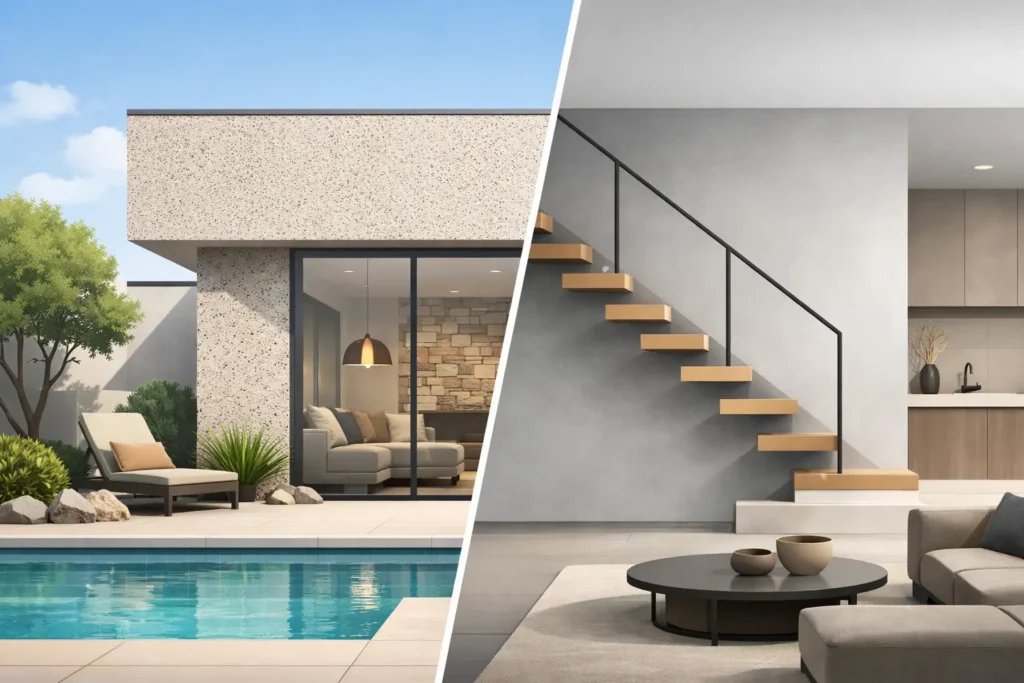
The distinction is visible as soon as you stand close to the surface. Spray stone has a more granular, stone-like texture. Microcement is usually smoother and more clouded or trowelled in appearance. Neither is automatically better. They simply create different design outcomes and have different practical requirements.
Appearance: Texture or Trowelled Movement?
If you are drawn to the character of stone, spray stone is often the more natural fit. Its texture catches the light and can give a media wall, hallway feature or fireplace a substantial, premium presence. Colours can be selected to complement cabinetry, flooring, worktops and existing décor, making it particularly useful when a room needs an intentional focal point rather than another flat wall finish.
Microcement tends to suit schemes built around clean lines and restrained detail. Its hand-trowelled finish can range from soft and understated to more expressive, depending on colour, application and sealing. It is well suited to clients who want a continuous, minimalist surface with no obvious tile joints.
It is worth viewing physical samples in the room wherever possible. Natural light, artificial lighting and surrounding colours can change how both finishes read. A warm grey that feels elegant beside oak cabinetry may look cooler against bright white sanitaryware. This is where professional advice and bespoke colour matching make a genuine difference.
Preparation Matters More Than the Final Coat
A beautiful finish depends on what is underneath it. This is especially true when restoring rather than replacing existing surfaces. Sound preparation allows a coating system to perform as intended and gives the final surface its factory-quality appearance.
For spray stone, the existing substrate must be assessed for stability, cleanliness, moisture exposure and suitability. Cracks, loose material, failing coatings and uneven sections need attention before decorative layers are applied. The aim is not to disguise an underlying problem, but to create the correct foundation for a lasting transformation.
Microcement is similarly dependent on careful preparation. It is not a shortcut around movement, damp issues or an unsound floor or wall. Because it is applied in thin layers, imperfections in the substrate and weaknesses in the preparation stage can affect the appearance and long-term performance of the finished surface.
This is one reason professionally applied finishes are not all interchangeable. The product, primer, reinforcement where required, application method and protective sealers need to work together as a system. Choosing a finish only from an online image can overlook the practical details that determine whether it is appropriate for the space.
Bathrooms and Wet Areas Need Extra Consideration
Bathrooms are often where the spray stone versus microcement decision becomes more detailed. Both can contribute to a modern, easy-to-clean look, but wet areas place greater demands on substrate preparation, detailing and protection.
Microcement is frequently specified for bathroom walls and floors because it creates a continuous appearance around basins, shower areas and bath surrounds. In wet rooms and shower spaces, however, the waterproofing strategy must be suitable before the decorative finish is applied. The final sealer is an important part of the system, but it should never be treated as a substitute for proper waterproofing beneath where that is required.
Spray stone can be an excellent choice for adding texture and visual warmth to bathroom feature walls, vanity areas and other suitable surfaces. Whether it is right for a particular shower enclosure or high-water-contact area depends on the complete system and the condition of the space. An experienced survey is the sensible place to start, particularly in older properties where previous leaks, tile movement or ventilation issues may not be obvious at first glance.
For either finish, daily care should be straightforward rather than harsh. Non-abrasive cleaning, prompt attention to spills and following the specialist’s maintenance guidance will help preserve the surface and its protective finish.
Durability Is About Use, Not Just Material
Clients often ask which option is more durable. The honest answer is that durability is not a single product claim. It depends on the area, the standard of preparation, correct application and how the surface is treated afterwards.
A decorative wall behind a television has very different demands from a family bathroom floor, a commercial reception area or a fireplace surround. A lightly textured spray stone finish may be ideal where visual impact and resistance to everyday knocks matter most. Microcement may suit a continuous floor-and-wall scheme, provided the substrate and sealing system are designed for that use.
Texture also affects the experience of living with a surface. Spray stone has a more tactile finish, which adds character but may not be the preferred choice for someone seeking an entirely smooth look. Microcement is smoother, yet its hand-applied nature means tonal variation and trowel marks are part of its charm. If you expect a perfectly flat, uniform result, a sprayed finish or another surface treatment may be more appropriate.
Disruption and Restoration Potential
One of the strongest advantages of surface refinishing is the opportunity to update suitable existing areas without automatically stripping everything back. Removing tiles, replacing built-in features or rebuilding a media wall can create considerable dust, waste and disruption. Restoration can offer a more considered route when the base surface remains sound.
Spray stone is particularly effective for decorative transformations where the existing form is already right but the appearance feels dated or uninspiring. A fireplace, feature wall or carefully prepared exterior surface can gain a completely different character while retaining the structure already in place.
Microcement can also be applied over certain existing surfaces, subject to proper assessment and preparation. That does not mean every tiled wall, floor or damaged surface is a candidate. Movement, poor adhesion, significant unevenness and moisture problems need to be dealt with first. Professional advice should be based on the actual surface, not a one-size-fits-all promise.
Choosing the Right Finish for Your Project
Choose spray stone when you want visible stone character, tactile texture and a statement finish for a feature surface. It is especially compelling when you want to elevate an existing media wall, fireplace, interior feature or selected exterior area with a finish that feels individual and substantial.
Choose microcement when a smooth, continuous and hand-crafted appearance is the priority. It can be a strong design choice for contemporary bathrooms and spaces where reducing visual breaks between surfaces is central to the scheme.
There is also room for both within one property. A microcement-style bathroom aesthetic and a textured spray stone media wall do not compete with each other when the colours and overall design are considered together. The key is to let function lead first, then select the finish that delivers the right visual effect.
With more than 22 years of professional spray finishing experience, Spray Granite Specialists approaches every project with that balance in mind: assess the surface properly, prepare it meticulously and recommend a finish that suits the space rather than forcing a trend onto it. The best result is one that still feels right after everyday life has resumed, not simply on the day the work is completed.