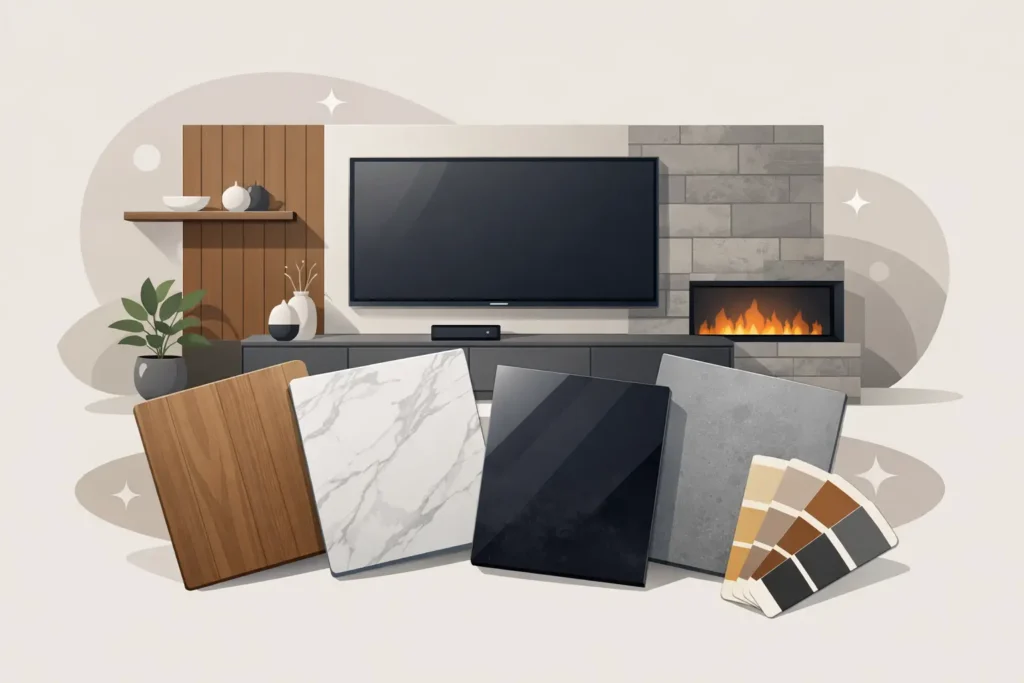
A media wall is often the visual anchor of a living room. It frames the television, fireplace and shelving, but it also has to sit comfortably with the flooring, furniture, lighting and the way the room is used every day. Choosing the best finishes for media walls is therefore less about following a trend and more about selecting a surface with the right depth, durability and relationship to the rest of the space.
A strong finish can make a simple stud wall look considered and high-end. The wrong one can feel flat under lighting, show marks around switches and shelving, or overwhelm a room that is already busy. This guide looks at the most effective options, where each works best, and why professional preparation makes such a visible difference.
Best finishes for media walls: start with the room
Before narrowing down colours or materials, consider how the wall will be seen. A media wall in a bright, open-plan room needs a different approach to one in a compact lounge with low natural light. Darker colours can be striking, for example, but a finish with too much sheen may reflect windows, lamps or the television screen.
The fireplace position matters too. Where a media wall includes an electric fire, the finish needs to complement the flame effect rather than compete with it. Warm stone tones tend to suit realistic log fires, while charcoal, black or deep bronze finishes can create a more contemporary, architectural look.
It is also worth looking at nearby surfaces. A media wall should not be designed in isolation from kitchen cabinetry, worktops, internal doors or feature panelling visible from the same room. Bespoke colour matching allows the finished wall to feel intentional rather than like a separate addition.
Professionally sprayed smooth finishes
For many homes, a professionally sprayed finish is the most versatile choice. It creates a smooth, even surface without the brush lines and roller texture that can be particularly noticeable around inset shelving, television recesses and LED-lit details.
A sprayed media wall can be finished in almost any colour, from soft off-whites and warm greiges to confident deep greens, navy or black. This makes it well suited to homeowners who want a tailored result without adding heavy texture or changing the proportions of the room.
A low-sheen or matt finish is usually the most forgiving option for a television wall. It absorbs more light, reduces distracting reflections and gives the wall a calm, refined appearance. In a family room, however, a carefully selected satin finish can be worth considering if greater wipe-clean practicality is needed. The right choice depends on the coating system, the amount of traffic around the wall and how the room is lit.
The quality lies in the preparation as much as the final coat. Joints, screw holes, corners and transitions around recessed features must be carefully prepared before spraying. Under concealed lighting, even minor imperfections can become obvious, which is why a factory-quality finish relies on meticulous work beneath the surface.
When a single colour is the right choice
A single-colour finish works especially well when the media wall has strong proportions already. If it includes a fireplace, symmetrical alcoves or integrated cabinetry, one rich colour can pull every element together and let the shape of the design do the work.
This approach is also effective in smaller rooms. Rather than using several textures and finishes, a single darker shade behind the television can add depth while keeping the overall look composed. Extending the same colour across shelves and side units creates an elegant built-in effect.
Decorative stone-effect finishes
Stone-effect finishes offer texture and character without the weight, disruption or extensive building work associated with fitting natural stone. They are a particularly effective option when a media wall needs more presence than painted plaster alone can provide.
Infinity Spray Stone decorative finishes can recreate the visual depth of stone through layered colour and texture. The result can range from soft limestone-inspired tones to darker slate or concrete-style effects, depending on the desired interior scheme. Because the finish is applied professionally, it can be continued across awkward shapes, curves, recesses and fireplace surrounds in a way that panels or tiles may not allow.
Stone effects work beautifully with timber, black metal details and warm ambient lighting. A pale mineral finish can lift a room with oak flooring and neutral upholstery, while a darker textured finish can create a dramatic backdrop for a linear fire and wall-mounted television.
There is a balance to strike. Highly textured finishes tend to look their best on a broad, uncluttered section of wall. If the media wall already has several small shelves, decorative objects and feature lights, a quieter stone effect or smoother finish may achieve a more luxurious result.
Concrete and plaster-inspired looks
Concrete-look and plaster-inspired media walls have become popular because they bring a softer, more architectural alternative to conventional grey paint. The best versions have movement and tonal variation rather than looking uniformly flat.
This style suits contemporary interiors, industrial-influenced spaces and newer extensions. Warm greys, taupes and mushroom tones can be more welcoming than cool concrete shades, especially in north-facing rooms. They pair well with brass, bronze, smoked glass and natural timber, giving the wall a modern finish without making the room feel stark.
A professional decorative coating is often more practical than relying on an untreated, porous plaster surface. It can provide the intended visual texture while being designed for easier ongoing care. The exact finish should be discussed in relation to the fireplace, lighting and any adjacent surfaces so the final tone is consistent rather than unexpectedly blue, green or cold.
Wood-effect panels and slatted details
Timber slats and wood-effect panels can introduce warmth where a room has hard flooring, dark furniture or large areas of glass. They are often used as a central vertical section behind a television, with painted or sprayed cabinetry on either side.
The appeal is clear, but proportion is everything. Slats applied across every surface can make a media wall feel overly busy, particularly where there are already shelves and a fire opening. Used in a defined area, they create texture and guide the eye without taking over the room.
Wood-effect finishes are most successful when their undertone is considered. Pale oak complements relaxed, Scandinavian-inspired schemes, while smoked oak and walnut work well with darker painted walls and more formal interiors. The finish should relate to the existing floor or furniture without attempting an exact match that may appear accidental if the tones differ.
Large-format panels and porcelain effects
Large-format porcelain, marble-effect or stone-look panels can deliver a bold, polished appearance. They are often chosen for media walls with a fire feature because they create a strong vertical focal point and suit symmetrical layouts.
These finishes can look exceptional, although they need careful planning. Veining, joint positions and the television location should be agreed before installation so that the pattern feels balanced. A busy marble design behind a television may distract from the screen, while a quieter panel with subtle movement can provide the same sense of luxury with less visual noise.
Panels are also less adaptable once fitted than a professionally sprayed decorative finish. If the media wall has irregular detailing, narrow returns or bespoke shelving, a spray-applied finish may offer a cleaner, more continuous result.
Choosing colour, sheen and lighting together
Colour does not exist separately from lighting. Warm LED strips can make cool grey surfaces appear more inviting, while cooler lighting can make creamy neutrals look sharper. Before committing to a finish, view samples at different times of day and with the media wall lighting switched on.
For television areas, deep tones such as charcoal, dark olive, midnight blue and warm black remain popular because they reduce contrast around the screen. They can also make a large television feel less dominant when it is switched off. Softer neutral finishes are a better fit when the aim is to keep the room bright and airy, particularly in spaces without much daylight.
Sheen deserves the same attention. Gloss is rarely the best choice behind a television due to reflections. Matt and low-sheen finishes are generally more considered, while satin can be appropriate on lower cabinetry or surfaces likely to receive regular contact.
Why the finish is only as good as the preparation
Media walls combine many challenging details: plasterboard joints, sharp external corners, inset shelves, cable openings, fire recesses and different materials meeting in one place. A premium result depends on preparing each of these areas correctly before the chosen finish is applied.
Professional spray finishing provides a consistent, refined appearance across the full structure, including cabinetry and difficult-to-reach recesses. At Spray Granite Specialists, over 22 years of spray finishing experience informs every stage, from assessing the existing surface to selecting a suitable coating and achieving an even, durable final result.
The most successful media walls do not simply copy a photograph. They use the right finish for the light, layout and character of the property. Whether that means a deep sprayed colour, a subtle stone effect or a carefully placed timber detail, a considered surface can turn the wall into a feature that still feels right long after the latest trend has moved on.