
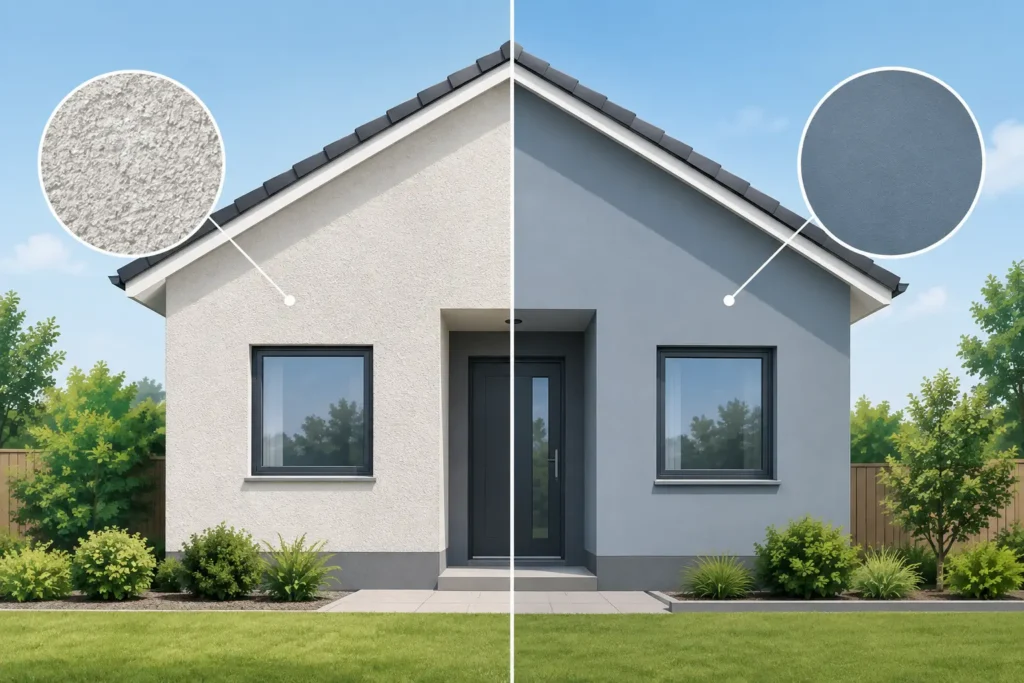
A tired exterior can make an otherwise well-kept property look neglected long before the roof, windows or garden need attention. When comparing render coating vs exterior paint, the right choice is not simply about choosing a colour. It depends on the condition of the wall, the type of render already in place, the level of exposure to weather and the standard of finish you expect over the years ahead.
For homeowners, landlords and commercial property owners, a professionally applied exterior coating can be an effective way to refresh and protect existing walls without the disruption of unnecessary replacement. However, paint still has its place. Understanding the difference helps you invest in a finish that looks right, performs well and suits the property.
What is the difference between render coating and exterior paint?
Exterior paint is generally a coloured finish applied over suitably prepared masonry, brickwork, render or previously painted walls. Its main purpose is decorative, although quality exterior paint can also offer a degree of weather protection. It is often the appropriate choice where walls are sound, clean and already have a stable painted surface.
A render coating is a more substantial protective coating system designed for rendered or masonry elevations. Depending on the product and specification, it may provide a thicker, more flexible and more textured finish than standard paint. These coatings are often selected where a property needs more than a change of colour, particularly when existing render is weathered, uneven in appearance or prone to recurring surface issues.
The terms can sometimes overlap, which is why a professional assessment matters. Not every wall that looks worn needs new render, and not every rendered wall is suitable for a simple repaint. The quality of the existing substrate is always the starting point.
Render coating vs exterior paint: durability and protection
The biggest practical difference is usually in how each finish handles the demands of an external wall. Exterior walls face rain, frost, sunlight, airborne dirt and changing temperatures throughout the year. On exposed elevations, these pressures can quickly reveal weaknesses in poor preparation or unsuitable materials.
A high-quality exterior paint system can give a clean, even result on stable walls. It is a sensible option when the render is intact, previous coatings are well bonded and there is no sign that moisture or movement is affecting the surface. The finish can transform a faded façade, modernise dated colours and improve kerb appeal with relatively little intervention.
Render coatings tend to be chosen where extra resilience and surface coverage are required. Their greater build can help create a more uniform appearance across patchy or tired render, while flexible formulations may better accommodate minor movement in the substrate. This does not mean they will solve structural cracks, failed render or water ingress. Any underlying defect must be identified and addressed before a new coating is applied.
A coating is only as dependable as the surface beneath it. Applying premium materials over loose, hollow or contaminated render may make a wall look better temporarily, but it is not a lasting solution. Thorough inspection and preparation are what separate a professional finish from a short-lived cosmetic improvement.
Appearance: smooth paint or a textured coating?
The visual result is another important consideration. Exterior paint usually produces a smoother, more straightforward decorative finish, although the final look will still reflect the texture of the wall beneath. Fine cracks, repairs, roller marks and inconsistent render can remain visible if they are not properly dealt with during preparation.
Render coatings can offer more choice in texture and can be particularly effective where a property needs a more substantial, contemporary exterior finish. A subtle textured effect can help disguise minor visual inconsistencies and give the elevation more depth, while smoother coating options can create a crisp modern look. Colour choice matters too. A carefully selected neutral, heritage shade or deeper contemporary tone can change the character of a property without altering its structure.
Neither option is automatically more attractive. A period home with sound, finely finished render may benefit from a breathable paint system that respects its original character. A newer property with weathered, patch-repaired render may look far more cohesive with a professionally specified coating system.
Preparation determines the result
Whether choosing paint or a render coating, preparation should never be treated as an afterthought. External walls often carry years of dirt, algae, chalking paint, failed sealants and poorly completed repairs. These issues can prevent adhesion and affect the final appearance.
Professional preparation may include cleaning the surface, removing loose or flaking material, repairing suitable defects, treating biological growth and applying compatible primers where required. Masking windows, doors, soffits and surrounding details carefully is equally important. Exterior spraying can achieve an even, factory-quality finish across large wall areas, but only when the surrounding property is protected and the coating is applied in suitable conditions.
At Spray Granite Specialists, this attention to preparation sits at the heart of every surface transformation. A premium coating is valuable, but the care taken before application is what gives it the best opportunity to perform as intended.
When exterior paint is the better choice
Exterior paint is often the right route where the wall is fundamentally sound and the aim is to refresh the existing look. If the current render has no meaningful movement, no widespread cracking or detachment, and no persistent damp-related staining, repainting may deliver exactly what the property needs.
It can also be preferable when retaining a fine surface texture is important. Some buildings simply do not need the additional build or texture associated with a coating system. In these cases, a professionally prepared and sprayed paint finish can provide a smart, consistent result while preserving the character of the existing wall.
The key is not to assume that paint is a lesser option. On the right substrate, with the right preparation and product selection, it can be a practical and attractive finish.
When a render coating makes more sense
A render coating may be the stronger option when an elevation is visually uneven, heavily weathered or affected by repeated surface deterioration. It can provide a more substantial finish where standard paint may struggle to give the desired level of coverage and uniformity.
It is also worth considering for properties exposed to driving rain, coastal air or frequent temperature changes, provided the wider wall construction has been assessed properly. In towns and coastal areas across Yorkshire and Lincolnshire, exterior walls can be subjected to demanding conditions, so product compatibility and professional application are especially important.
A render coating should not be used to hide serious problems. Deep cracks, crumbling render, trapped moisture and failed detailing need investigation first. Honest advice may mean recommending repairs before coating work begins, because a high-end finish deserves a stable foundation.
Maintenance and long-term value
Both exterior paint and render coatings benefit from sensible maintenance. Keeping gutters, downpipes and seals in good order helps prevent water from continually running over walls. Occasional gentle cleaning can also reduce the build-up of dirt and organic growth, helping the finish retain its appearance.
The better long-term value is not always the option with the lowest initial outlay. It is the finish that suits the wall, is properly prepared and avoids the need for premature corrective work. A well-specified coating can offer a more refined and resilient solution for some properties, while quality exterior paint can be the most appropriate choice for others.
Choosing the right finish for your property
The most reliable way to decide between render coating and exterior paint is to look beyond colour charts. Consider the age and condition of the render, how exposed the elevation is, whether repairs are visible and whether you want a smooth painted look or a more substantial coated finish.
A professional consultation gives you the opportunity to assess those details before work starts, including colour options, finish expectations and the preparation required. The best exterior transformation is not the one that uses the most material. It is the one that respects the existing surface, improves the appearance of the property and is completed with the care it deserves.