
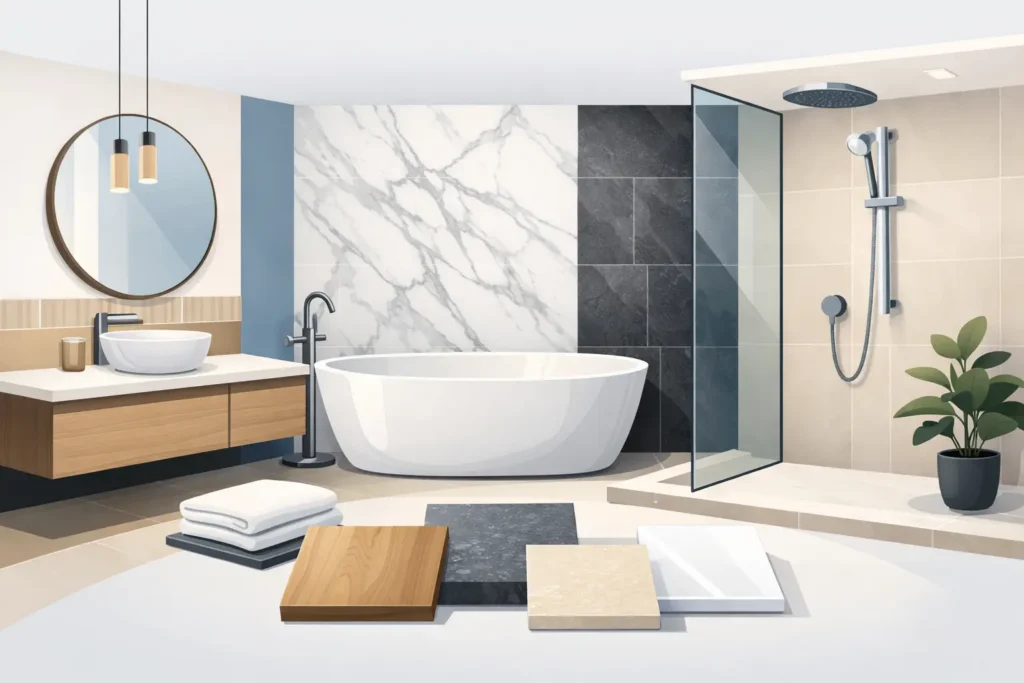
A bathroom can look dated long before its layout or fittings stop working. Yellowed tiles, a worn vanity unit or a scratched bath panel often make the whole room feel tired, yet replacing every surface can mean considerable disruption. Choosing the best bathroom surface materials is therefore about more than appearance. It is about how a finish handles moisture, cleaning, daily wear and the style you want to live with for years.
The right answer depends on where the surface sits. A shower enclosure has very different demands from a vanity unit, while flooring needs grip and resilience as well as a finish that suits the room. For many properties, the most effective route is not a complete strip-out, but a carefully planned combination of existing surfaces, new finishes and professional refinishing.
What makes a bathroom surface practical?
Bathrooms are hard-working spaces. Steam settles on walls, water finds its way around basins, and cleaning products are used more frequently than in most other rooms. A beautiful material that is poorly suited to the location can quickly become difficult to maintain.
Look first at moisture resistance, particularly around showers, baths and basins. The surface should also be easy to clean, compatible with the level of use in the property and appropriate for the substrate beneath it. A family bathroom, a hotel en-suite and a lightly used cloakroom all call for slightly different decisions.
Appearance still matters. Large-format finishes can make a compact bathroom feel calmer and more spacious, while textured stone effects bring depth to a contemporary scheme. The best results balance that visual impact with sensible maintenance requirements.
The best bathroom surface materials by area
Porcelain and ceramic tiles
Porcelain remains one of the most dependable choices for bathroom walls and floors. It is widely available in stone, concrete, marble and plain colour effects, making it suitable for traditional and modern interiors alike. Porcelain is particularly well suited to floors and wet areas because it is dense, durable and straightforward to maintain when correctly installed and grouted.
Ceramic wall tiles are another established option. They offer a broad choice of colours and formats, from glossy metro tiles to large, minimal panels. Ceramic is generally better suited to walls than heavily used floors, depending on the particular tile specification.
The drawback with tiled bathrooms is often not the tile itself, but the grout lines. More joints mean more areas to clean, and dated grout can make an otherwise sound bathroom feel old. If tiles are firmly bonded and in good condition, professional spray refinishing can transform their colour and finish without the mess of removing them.
Natural stone
Natural stone brings character that manufactured materials cannot fully replicate. Marble, slate, limestone and travertine each have their own movement, texture and colour variation. It can create an impressive feature wall, floor or vanity area, especially in a larger bathroom where the material has room to be appreciated.
However, stone requires a realistic approach to care. Some varieties are more porous than porcelain and need appropriate sealing and cleaning products. Highly polished surfaces can also show water marks more readily, while textured stone may need extra attention to keep clean. It is a premium choice for clients who value its individuality and are comfortable with the maintenance it deserves.
Quartz and engineered stone
Quartz and other engineered stone surfaces are popular for vanity tops, upstands and bathroom shelving. Their consistent appearance and clean, polished finish work particularly well in contemporary schemes. They are also available in a wide range of colours, from soft whites and warm neutrals to dramatic veined designs.
These materials are usually best used away from direct, constant saturation rather than as the main finish inside a shower enclosure. As with any composite surface, installation quality, joins and edge detailing make a major difference to its long-term appearance.
Solid surface materials
Solid surface products offer a sleek, almost joint-free look for vanity tops, integrated basins and wall panels. Their smooth finish is easy to wipe down and can suit bathrooms designed around clean lines and minimal visual clutter. This makes them a strong option for modern homes, serviced accommodation and commercial washrooms.
The limitation is that they can be more costly to install than simpler alternatives, and the overall design needs careful planning around basins, taps and wall junctions. For a fully renovated bathroom, they can deliver a refined result. For an existing vanity or tiled wall that is still structurally sound, professional refinishing may offer a more proportionate way to achieve a new look.
Decorative spray finishes and refinished surfaces
A professionally applied spray finish deserves consideration alongside traditional bathroom materials, particularly when the aim is transformation rather than replacement. Existing vanity units, tiles, bath panels and selected bathroom surfaces can often be prepared and refinished in a new colour or decorative stone effect, provided the condition and location are suitable.
This approach allows greater freedom with colour matching and can create a coordinated finish across several elements. A dark timber-effect vanity can become a soft contemporary neutral; dated wall tiles can be updated to a cleaner, more modern shade; a plain unit can be given a premium sprayed stone-style appearance.
Preparation is the foundation of the result. Professional surface cleaning, repairs where appropriate, masking and coating application all affect durability and finish quality. At Spray Granite Specialists, this attention to preparation is central to creating factory-quality transformations that are designed for everyday use, with waterproof coating systems used where applicable.
Walls, floors and vanity units should not be treated the same
One of the most common design mistakes is choosing a material purely because it looks good in a showroom. Bathrooms need surface choices that respond to their exact position in the room.
For shower walls and splash zones, prioritise surfaces and systems intended for wet environments, with well-considered joins and seals. Large-format porcelain, suitable wall panels and professionally specified coatings can reduce visual breaks and help create a clean finish.
For floors, think about slip resistance as well as colour and texture. Very smooth, high-gloss finishes may look striking but can be less practical in a busy family bathroom. Matt porcelain, stone-look tiles and finishes with gentle texture often provide a more balanced choice.
Vanity units need a finish that can cope with splashes, cosmetics, hand soap and regular wiping. A replacement worktop may be right where there is damage or a major layout change planned. If the unit is sound but the colour, doors or surface have dated, respraying can provide a significant visual upgrade while retaining the existing carcass.
Choosing colour and finish for a bathroom that lasts
Soft whites, warm greys, taupes and natural stone tones remain reliable choices because they work with changing towels, accessories and lighting. They also tend to make a bathroom feel brighter without appearing clinical. For more impact, deep green, charcoal, navy and black can look excellent on a vanity unit or feature wall, especially when balanced with lighter surrounding surfaces.
Finish level matters just as much as colour. Matt finishes can create a calm, contemporary look and are often forgiving of everyday marks. Satin offers a subtle sheen that works well on cabinetry. High gloss reflects light effectively in smaller rooms, but it may reveal fingerprints and water spotting more easily.
If you are updating an existing bathroom, avoid selecting each surface in isolation. Consider the relationship between floor, wall tiles, vanity, brassware and lighting. A professionally colour-matched spray finish can help bring these elements together, particularly where replacement tiles or furniture would otherwise introduce several competing tones.
When restoration is the smarter material choice
Not every tired bathroom needs new tiles, new cabinetry and a skip outside the house. Where surfaces are stable, well bonded and free from underlying water damage, refinishing can reduce disruption and preserve elements that still have years of useful life.
It is not suitable for every situation. Loose tiles, failed seals, serious structural damage and persistent damp issues should be addressed before cosmetic work begins. An experienced surface specialist will assess the condition honestly and advise whether restoration is appropriate for the area concerned.
For homeowners, landlords and commercial property managers, this can be especially valuable when a bathroom needs to look current without a lengthy closure or full refurbishment programme. The result is a more considered investment: keeping what works, improving what does not, and choosing finishes that suit the room’s real demands.
The most successful bathrooms rarely rely on one fashionable material. They combine practical surfaces in wet zones, durable finishes on everyday touchpoints and colours that still feel right after the latest trend has moved on. Start with the condition of what you already have, then choose the finish that will make the space work better as well as look better.