
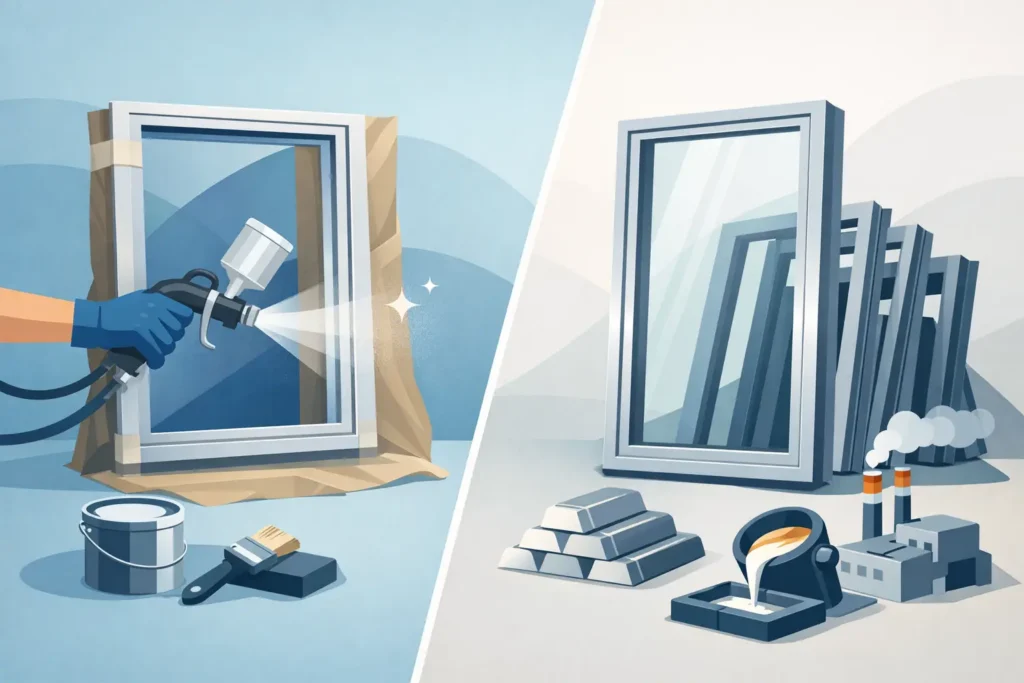
A faded aluminium window frame can make an otherwise well-kept property look dated. A front door with peeling colour, scratched patio doors or tired commercial shopfronts can create the same problem. Yet aluminium refinishing versus replacement is not simply a question of choosing the cheaper route. The right decision depends on the condition of the frames, the result you want, and how much disruption your home or premises can realistically accommodate.
For many properties, professionally refinishing sound aluminium windows and doors delivers a dramatic, long-lasting transformation without removing perfectly serviceable frames. In other cases, replacement is the sensible choice. Knowing the difference protects both the appearance of your property and the value of your investment.
What aluminium refinishing actually changes
Aluminium refinishing is a professional process that transforms the visible surface of existing aluminium frames, doors, bifold doors, shopfronts and architectural features. Rather than taking out the unit, a specialist prepares the surface carefully and applies a high-performance coating in your chosen colour and finish.
Preparation is what separates a lasting professional result from a short-lived cosmetic change. The aluminium must be thoroughly cleaned, degreased, keyed and treated where required so the coating can bond correctly. Areas that are not being sprayed are protected, and detailed sections around glazing, handles, seals and tracks are handled with care. The aim is an even, refined finish that looks appropriate to the quality of the property, not a coating that simply covers the old colour.
This makes refinishing particularly attractive when the existing frames are structurally sound but no longer suit the building. White aluminium can be updated to anthracite grey, black, bronze or a bespoke colour. A dated brown frame can be brought in line with a modern kitchen extension, new cladding or a redesigned interior. For commercial settings, colour matching can help create a more consistent, professional frontage without the downtime of replacing every frame.
Aluminium refinishing versus replacement: the key difference
Replacement addresses the entire unit. It may involve removing glazing, frames, trims and surrounding finishes before fitting new products and making good the reveals. Refinishing works with the existing unit, retaining the structure while changing its appearance and refreshing its protective surface.
That distinction has a significant effect on cost, programme and disruption. New aluminium windows and doors can be the right choice if the system is failing, poorly specified or no longer meets the practical needs of the building. However, when frames still operate correctly and the issue is primarily colour, weathering or surface damage, replacement can mean disposing of a great deal of material that still has years of useful life.
Refinishing is not a compromise when it is carried out on suitable frames with correct preparation and premium coatings. It is a considered restoration option for clients who want a luxury new look while preserving the quality already built into their property.
When refinishing is usually the stronger option
The best candidates for aluminium spraying are frames that remain secure, stable and functional. Doors should open and close properly, locking mechanisms should work as intended, and glazing should be in good condition. Minor surface marks, faded colour, light oxidation and outdated finishes are generally appearance issues rather than reasons to remove the full installation.
Refinishing can also be a practical choice where access is difficult. Large aluminium windows, upper-floor frames, conservatories, curtain walling and commercial entrances can all involve considerable labour and disruption if replaced. Professional spraying allows the visual change to happen with far less interference to the surrounding building fabric.
For landlords, developers and commercial property managers, reducing downtime often matters as much as appearance. Replacing door and window systems may affect security, access and occupation for longer than a carefully planned refinishing project. A sprayed finish can modernise communal areas, retail premises, offices and hospitality spaces while helping work continue around the project where appropriate.
The design flexibility is another major advantage. Replacement often means selecting from a manufacturer’s standard range, whereas a specialist spray finish can be colour matched to existing features or chosen to complement a wider scheme. That is particularly valuable when updating a property in stages or retaining architectural details that would be difficult to replicate.
When replacement is the sensible investment
There are situations where refinishing should not be presented as the answer. If aluminium frames are badly distorted, have serious corrosion, are damaged beyond reliable repair or no longer perform their intended function, replacement may be necessary. The same applies when glazing has failed, drainage is compromised or the existing system has persistent operational problems that surface restoration cannot solve.
Replacement can also be the better route when you need a different configuration. Perhaps a door opening needs to be widened, a fixed pane needs to become an opening window, or a property requires an entirely new entrance design. Spraying can transform the finish, but it cannot alter the structural layout or upgrade hardware that has reached the end of its serviceable life.
Older properties may have frames that do not meet the owner’s current expectations for thermal performance, acoustics or security. In that case, it is worth assessing the whole unit rather than focusing only on the colour. Honest advice should always begin with the condition and performance of the existing aluminium, not a one-size-fits-all recommendation.
Consider the hidden disruption, not just the visible result
Replacement projects can affect internal plasterwork, external render, sills, blinds, flooring and decorating around the opening. Even a well-managed installation may require making good afterwards. There can also be lead times for manufacturing, delivery and fitting, particularly for non-standard sizes or bespoke colours.
Refinishing avoids much of this because the original frame stays in place. It does still require professional preparation, protection of adjacent surfaces and suitable weather conditions for external work, but it is generally a more contained process. For occupied homes, busy premises and properties with newly completed interiors, that reduced disturbance can make a substantial difference.
It is worth looking beyond the first impression of cost. The real comparison includes removal, disposal, new units, installation, repairs to surrounding finishes and the inconvenience of having openings worked on. A refinishing quotation should also reflect the time spent preparing the substrate properly, masking accurately and applying coatings designed for the surface and environment.
Durability comes down to preparation and aftercare
Aluminium is a durable material, but any new finish is only as dependable as the work beneath it. Dirt, contaminants, failed previous coatings and inadequate surface keying can all affect adhesion. This is why professional assessment and preparation are central to a successful aluminium refinishing project.
Once refinished, frames benefit from straightforward care. Routine cleaning with suitable non-abrasive products helps keep the coating looking its best. Avoid harsh scouring pads, aggressive solvents and unnecessary scraping around edges, handles or seals. If a frame is struck or damaged, addressing it promptly helps prevent a small issue from becoming more noticeable.
External exposure matters too. Coastal locations, heavily polluted areas and south-facing elevations can place greater demands on finishes over time. These are not reasons to rule out refinishing, but they are factors a knowledgeable specialist should consider when recommending products, preparation and maintenance.
Choosing based on the property, not the trend
Dark aluminium frames remain a popular choice because they add definition and a contemporary feel to brick, render and light-coloured interiors. Yet the most successful colour is the one that works with the building as a whole. Warm blacks, soft greys, heritage tones and carefully matched colours can often look more considered than following a single trend.
Before deciding between refinishing and replacement, assess the frame condition, how the units perform, whether the configuration still works, and the amount of disruption you can accept. It can also help to view the windows and doors alongside your roofline, entrance, kitchen, flooring and exterior finishes. Aluminium has a strong visual presence, so changing its colour can reshape the character of a property surprisingly quickly.
With over 22 years of professional spray finishing experience, Spray Granite Specialists assesses each surface on its merits. Where aluminium is sound, meticulous preparation and a premium spray finish can create a striking transformation without the upheaval of full replacement. Where replacement is genuinely needed, it is better to know before work begins.
The most useful next step is not to choose a colour immediately. Start by having the existing frames assessed honestly. A clear view of their condition, the finish you want and the practical demands of the space will show whether restoration can give you the result you are looking for, or whether a new installation is the wiser long-term choice.