
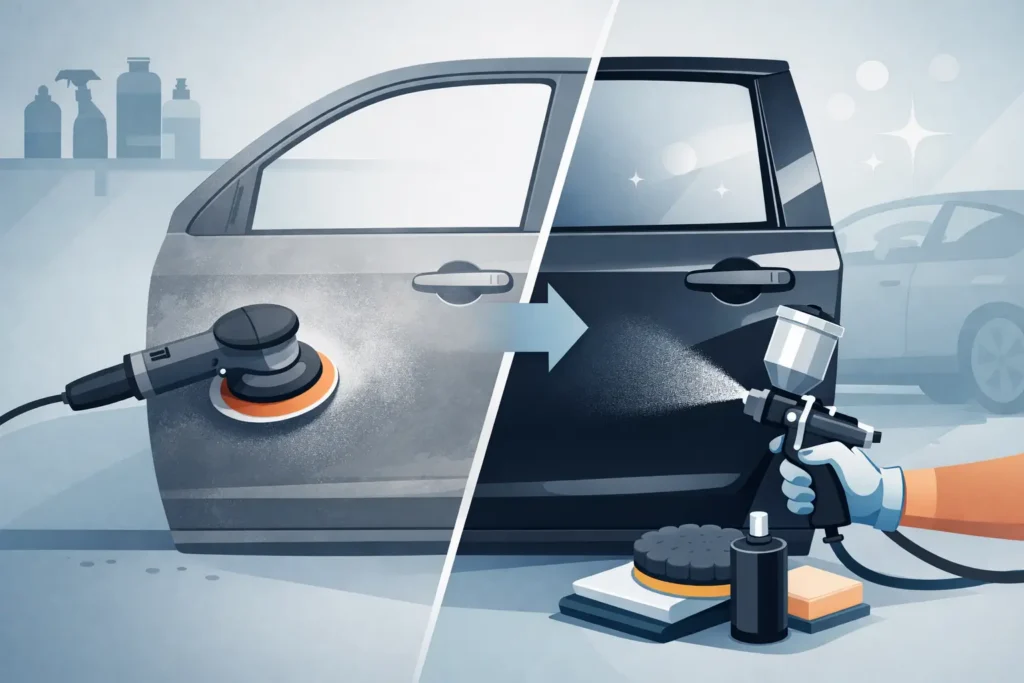
A front door can fade so gradually that it is easy to overlook – until the rest of the property has been refreshed and the tired, chalky finish suddenly stands out. Strong sunlight, rain, changing temperatures and everyday use all take their toll on uPVC, composite and aluminium doors. The good news is that faded door restoration can bring back a smart, even finish without the cost, mess and disruption of a full door replacement.
For homeowners, landlords and commercial property owners, professional door spraying offers an opportunity to update colour, improve kerb appeal and protect a sound existing door. The result should not look like a temporary cover-up. With the right preparation, coatings and application, it can look clean, contemporary and factory-finished.
Why doors fade and lose their finish
External doors live with far harsher conditions than most surfaces inside a property. South-facing elevations are particularly exposed to ultraviolet light, which can break down pigments and leave darker colours looking pale, uneven or powdery. Rainwater, frost, road grime and airborne pollutants can add to the deterioration over time.
On uPVC doors, fading may be accompanied by a dull surface that no longer cleans up as well as it once did. Composite doors can lose depth of colour, particularly around raised panels and moulded details. Aluminium doors are generally hard-wearing, but older coated finishes can still look worn, scratched or dated after years of exposure.
Fading is not always simply a cosmetic issue. A tired surface can make an otherwise solid door appear older than it is, weakening the first impression of a home, retail premises or managed property. In many cases, the door itself remains structurally sound, operates properly and does not need replacing. Its finish is the part that needs professional attention.
What professional faded door restoration involves
High-quality faded door restoration is a refinishing process, not a quick paint application. The longevity and appearance of the finished door depend heavily on what happens before spraying begins.
The door is assessed first. A specialist will look at the substrate, existing condition, damage, seal integrity, moving components and any areas where the original finish is failing. Light scratches, colour loss and surface dullness are often suitable for restoration. Deep impact damage, significant warping, failed seals or faults affecting the door’s security may need addressing separately before refinishing is considered.
Preparation then creates the foundation for the new coating. This typically involves thorough cleaning and decontamination to remove dirt, grease, silicone residues and weathered material. The surface is carefully keyed and any appropriate repairs are completed so the coating has a sound, consistent base. Glass, hardware, surrounding brickwork and adjacent frames are protected with precise masking.
A compatible primer system is used where required, followed by professional-grade sprayed coatings applied in controlled, even layers. Spraying is particularly effective for doors because it produces a smooth finish across flat faces, moulded details and awkward edges without the brush marks associated with conventional painting. Once cured, the coating is designed to provide a durable, attractive finish that stands up to normal external use.
The difference lies in the discipline of the process. Rushing preparation may save time at the start, but it risks poor adhesion, uneven sheen and a finish that does not perform as it should.
Colour is more than a cosmetic choice
Restoration is an ideal time to move beyond the original door colour. A faded red composite door might suit a richer heritage shade, while dated white uPVC can be transformed into anthracite grey, black, deep green or a warmer neutral that complements the property’s brickwork and windows.
Colour matching can also be useful where a homeowner wants the door, frame, garage door or aluminium windows to work together visually. The best choice depends on the style of the building, the surrounding exterior palette and how much sunlight reaches the entrance. Very dark colours can create a striking contemporary look, although a specialist should advise on suitability for the specific door material and location.
Finish level matters too. A subtle satin sheen often gives a refined, modern appearance while remaining practical for everyday cleaning. The aim is not simply to make a door look newer, but to give it a finish that feels considered and in keeping with the property.
Restoration versus replacement: when spraying makes sense
Replacing a front door can be the right decision where there are serious structural problems, security concerns, extensive water damage or a need to alter the opening itself. However, replacement is not automatically necessary just because the colour has faded or the style feels dated.
If the door is secure, weather-tight and in good working order, refinishing may provide the transformation required while avoiding the disruption of removal, fitting work and disposal. This is especially valuable for properties with quality composite, uPVC or aluminium doors that have years of useful life left in them.
For landlords and commercial property managers, restoration can be a practical way to improve the presentation of multiple entrances with less downtime. A smarter frontage supports a better impression for tenants, customers and visitors, without turning a cosmetic update into a larger building project.
There is a trade-off to consider. Restoration changes the visible finish, but it cannot correct every underlying mechanical or structural defect. Honest assessment is essential. A reputable spray finishing specialist will explain whether the surface is a good candidate and set clear expectations before work begins.
The details that create a premium result
A door is one of the most visible surfaces on a property, and small details quickly show. Clean lines around glazing, letterboxes, handles and hinges help the finish look intentional rather than sprayed around. Careful masking protects areas that should retain their original finish, while even coverage around edges and recessed panels prevents colour variation.
Hardware deserves consideration too. Existing handles, knockers and letterplates may complement the new colour perfectly, or they may be the one element that dates the entrance. This does not mean everything must be changed. Often, a well-chosen new door colour gives quality hardware a fresh context. Where fittings are removed or protected during spraying, they should be refitted carefully to preserve the neatness of the completed work.
The surrounding frame also affects the final appearance. A beautifully refinished door within a heavily faded frame can look unfinished, whereas treating compatible door and frame surfaces together creates a more cohesive result. This is something to discuss during a consultation, alongside any matching window or exterior surface work being considered.
Looking after a restored external door
Once the coating has fully cured, maintenance is straightforward. Routine cleaning with a soft cloth and mild, non-abrasive cleaner helps remove everyday dirt without dulling the finish. Harsh solvents, scouring pads and aggressive chemicals should be avoided, as they can damage the coating over time.
It is also sensible to keep door drainage channels and thresholds clear of debris, check that hinges and locks operate correctly, and deal with accidental chips promptly if they occur. These simple habits support the appearance of the door and help maintain the wider entrance area.
No exterior finish is entirely immune to years of weather, particularly in exposed coastal locations or on sun-facing elevations. Yet a professionally prepared and sprayed door offers a far more considered response to fading than living with a tired entrance or replacing a perfectly serviceable door prematurely.
Choosing the right specialist for door refinishing
Door spraying requires knowledge of different materials, coating systems and external exposure. Ask how the surface will be prepared, whether the proposed coating is suitable for the door type, how surrounding areas will be protected and what aftercare is recommended. You should also expect advice on colour suitability rather than pressure to choose a fashionable shade that may not suit the property.
Experience matters because a door is not a simple flat panel. It has edges, joints, glazing, hardware and moving parts that need careful treatment. At Spray Granite Specialists, more than 22 years of professional spray finishing experience informs every stage, from the initial condition assessment to the final quality check.
A faded door does not have to remain the weak point of an otherwise well-kept property. With skilled restoration and a colour chosen for the building rather than a passing trend, the entrance can once again feel welcoming, protected and properly finished.