
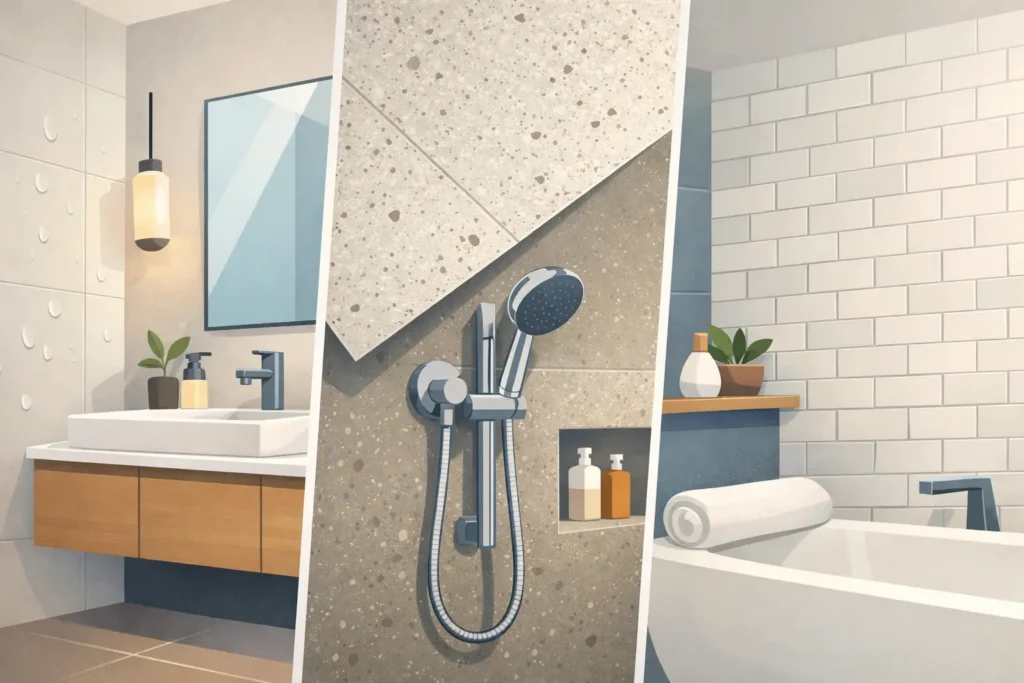
A bathroom can look tired long before its layout stops working. Stained grout, dated tiles, peeling paint and mismatched wall surfaces can make the whole room feel neglected, even when the bath, shower and vanity unit are still perfectly serviceable. Choosing durable bathroom wall finishes is about more than a fresh colour. It is about creating a surface that stands up to steam, splashes, regular cleaning and daily use while giving the room a refined, considered appearance.
For homeowners, landlords and commercial property owners, the right choice often comes down to balancing appearance, practicality and disruption. A full strip-out may be appropriate where there is underlying damage or a change of layout is needed. In many bathrooms, however, professionally restoring sound existing surfaces can achieve a luxury result without the mess, waste and downtime of replacement.
What makes a bathroom wall finish durable?
Bathrooms are demanding spaces. Warm, humid air settles on walls and ceilings, shower areas receive direct water exposure, and surfaces need cleaning often enough to remove soap residue, limescale and everyday marks. A wall finish needs to be suitable for the specific conditions it will face, rather than simply looking good on the day it is applied.
Durability begins with water resistance in the right areas. Walls around showers, wet rooms and baths require a finish designed to cope with regular moisture exposure. Less exposed walls may have more decorative flexibility, but they still need to tolerate condensation and cleaning without blistering, staining or losing their finish.
The quality of the substrate matters just as much. Loose tiles, failed sealant, damaged plaster, movement in the wall and signs of persistent damp should be identified before refinishing begins. A premium coating cannot compensate for an unstable surface underneath it. Proper assessment and preparation protect the appearance and performance of the finished room.
Finally, durable finishes should be practical to live with. Smooth, non-porous or carefully sealed surfaces are generally easier to wipe down than heavily textured finishes or grout-heavy walls. That does not mean every bathroom should look clinical. It means selecting a finish that offers the level of maintenance your household, tenant or business setting can realistically maintain.
Durable bathroom wall finishes to consider
There is no single best finish for every bathroom. The shower enclosure, ventilation, existing wall condition, design style and desired level of disruption all influence the right approach.
Professionally sprayed tile finishes
If existing wall tiles are sound, firmly bonded and the layout remains right for the room, professional tile spraying can be a compelling alternative to removing and replacing them. It can transform dated colours, busy patterns or worn-looking surfaces into a clean, contemporary scheme while retaining the original tiled structure.
The result depends heavily on preparation. Tiles and grout lines need to be thoroughly cleaned, repaired where needed, keyed correctly and coated using a system suited to the environment. When completed by an experienced spray-finishing specialist, this approach can refresh a bathroom with a smooth, factory-quality appearance and far less disruption than a full re-tile.
It is particularly useful where a property needs a coordinated update. Wall tiles, a vanity unit, splashback details and other suitable surfaces can be colour-matched to create a more intentional, high-end finish rather than a collection of unrelated elements.
Wall panels for wet areas
Bathroom wall panels are commonly considered for shower and bath surrounds because they reduce the number of grout joints. They can offer a clean, modern appearance and are available in a wide range of stone, marble and plain finishes. For certain refurbishment projects, they may be the right solution, especially where the existing wall surface is unsuitable for refinishing.
Their performance still relies on precise installation and properly sealed joints. A panel is not automatically the best answer simply because it is marketed for bathrooms. Corners, trims, service penetrations and edges around shower fittings need careful attention, as these are the places where moisture can find its way behind a surface.
Ceramic and porcelain tiles
Ceramic and porcelain remain popular choices for bathrooms because they are familiar, versatile and well suited to wet areas when installed and grouted correctly. They can provide a long-lasting finish, particularly in heavily used shower zones.
The trade-off is the disruption involved in removing old tiles and preparing walls for replacement. Grout also requires ongoing care, and a large tiled area can make a smaller bathroom feel busy if the format, colour or layout is not chosen carefully. Larger-format tiles can reduce visible joints, though they demand a sufficiently flat substrate and skilled fitting.
Decorative stone-effect finishes
A decorative stone-effect wall finish can bring depth and character to a bathroom, particularly on feature walls, behind freestanding baths or in areas outside direct shower spray. The appeal lies in achieving a natural, contemporary look without the weight and extensive building work associated with solid stone.
Suitability depends on the product system and the location within the room. A decorative finish for a low-splash feature wall is a different specification from one intended for a wet room. This is where professional advice matters: the desired look should never take priority over the finish being appropriate for its exposure to water.
Preparation is where long-lasting results begin
The most impressive bathroom transformations are rarely about a quick top coat. They begin with detailed preparation, because every small defect becomes more visible once the finish is smooth and newly coloured.
Before refinishing a bathroom wall, a professional should assess adhesion, surface contamination, cracks, failed grout, silicone condition and previous coatings. Shower areas may also need checks for water ingress or movement. Any underlying issue should be addressed before the decorative work begins, rather than covered over and left to reappear later.
Cleaning and degreasing are essential, but so are the correct primers, repair materials and coating process for the substrate. The same approach cannot be applied indiscriminately to tiles, plaster, MDF vanity units and waterproof board. Each surface has different preparation requirements, and a professional finish is built around those details.
At Spray Granite Specialists, this preparation-led approach is central to surface restoration. With more than 22 years of spray-finishing experience, the focus is on assessing what can be transformed properly, selecting suitable premium coatings and delivering an even, carefully finished result.
Choose the finish for the zone, not just the look
A bathroom has several moisture zones. The wall inside a shower enclosure faces direct and frequent water exposure. Walls next to a basin receive splashes and cleaning products. A feature wall on the opposite side of a well-ventilated room may experience only condensation. Treating all three areas as if they have the same demands can lead to poor material choices.
For direct wet areas, prioritise a system specifically suited to that level of exposure and ensure surrounding seals, joints and fittings are in good condition. For low-exposure areas, consider whether a softer colour, stone effect or complementary sprayed finish could introduce warmth and character without compromising practicality.
Ventilation should be part of the decision too. Even the most carefully chosen wall finish will benefit from adequate extraction, sensible heating and allowing the room to dry after use. Persistent condensation places unnecessary pressure on every surface, including ceilings, window frames and cabinetry.
Restoration versus replacement
Replacing bathroom walls may be necessary where tiles are unstable, plumbing needs altering, hidden water damage is present or the layout no longer works. It is not the only route to a premium bathroom, though.
Where the structure is sound, restoration can preserve usable materials and avoid the noise, dust and extended downtime associated with demolition. It can also give property owners greater freedom to update colour and style without committing to a full refurbishment. This is especially valuable in rental properties, hospitality settings and commercial spaces where keeping rooms out of use for long periods has a real cost.
The key is being honest about the condition of the existing surfaces. A reputable specialist will explain when refinishing is appropriate, where repairs are needed and when replacement is the more sensible long-term choice.
Keeping bathroom walls looking their best
Once a durable finish is in place, regular gentle care helps protect it. Wipe away excess water and soap residue, use non-abrasive cleaning products appropriate to the surface, and avoid harsh scouring pads that can dull a finish over time. Pay attention to silicone seals and grout lines too, as early maintenance is far simpler than allowing minor deterioration to become water ingress.
A well-planned bathroom does not need to be rebuilt from scratch to feel new. Start with the condition of the walls, consider how each area is used, and choose a finish backed by proper preparation and experienced workmanship. That is how a fresh bathroom look becomes one that continues to earn its place for years to come.